
Butea Superba Guide
Plant, Root & Identification
Using the scientific name is especially useful when communicating with manufacturers, suppliers, and buyers because common names can sometimes vary between regions.
01
Botanical Classification & Growth Habit
Family
Butea superba belongs to the Fabaceae (Legume/Pea) family.
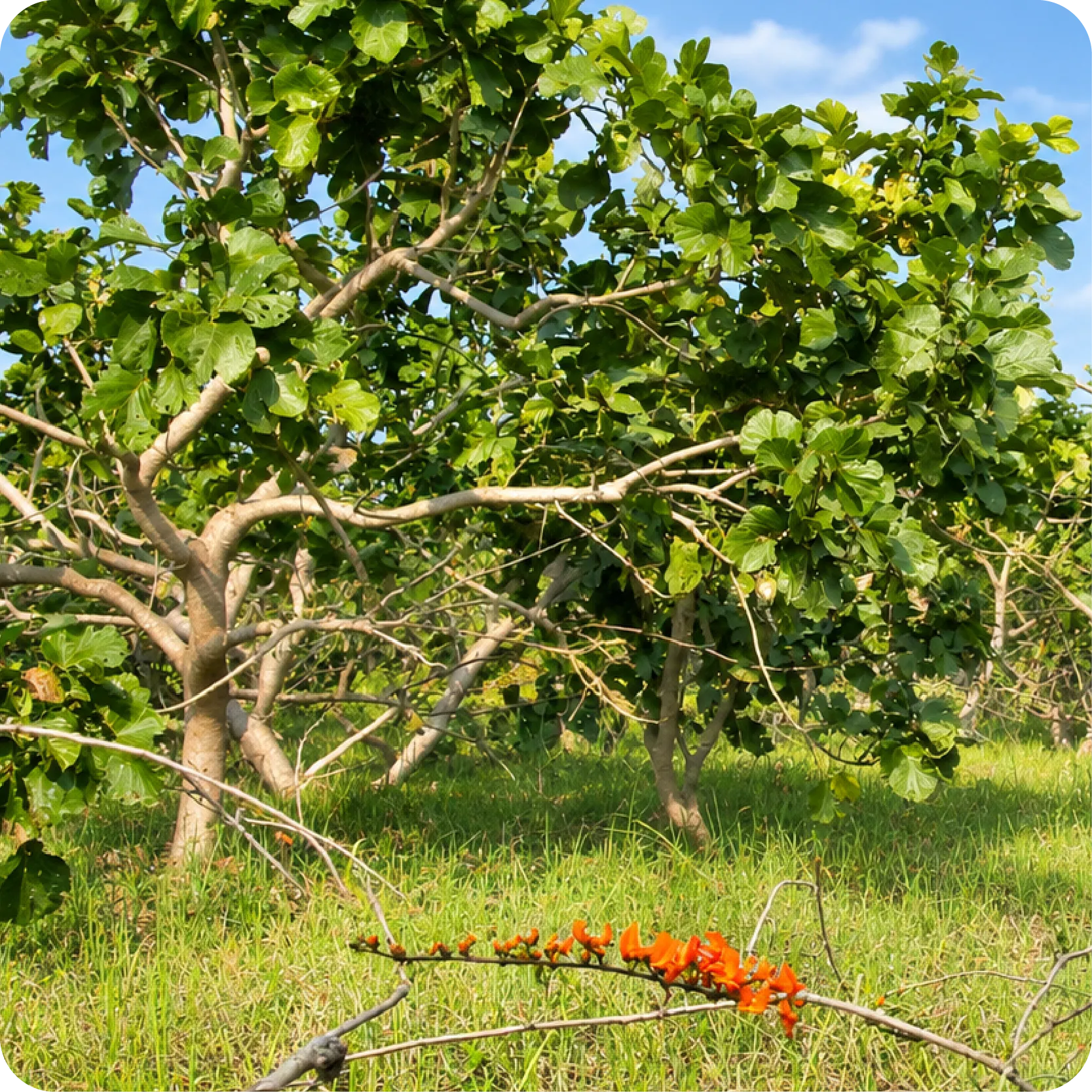
Vining Nature
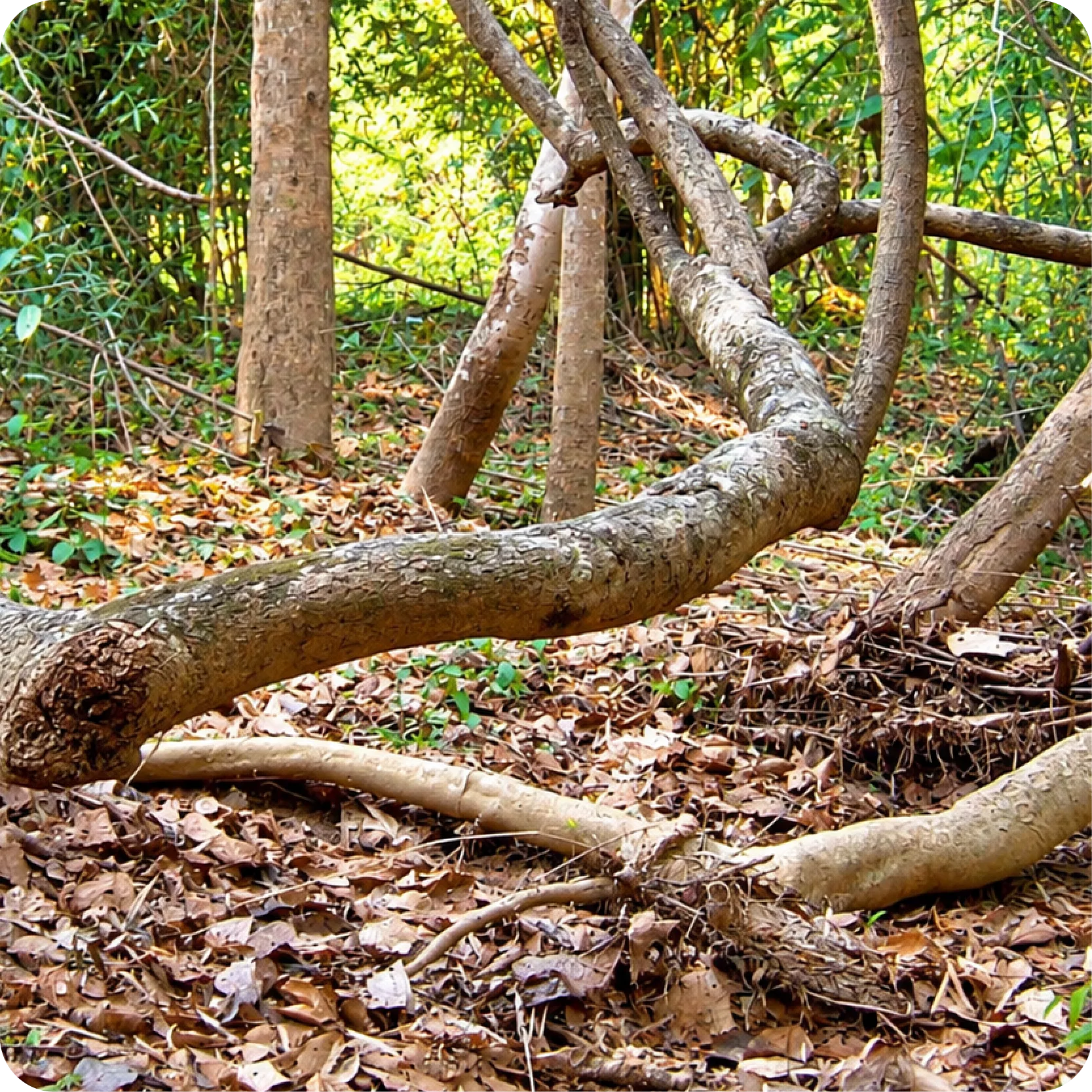
Butea superba is a long-lived climbing plant found in Thailand and neighboring tropical regions. It grows as a vine and can climb around larger trees.
Foliage & Flowers
The plant has three leaflets on each branch and produces distinctive yellowish-orange flowers during its flowering period.
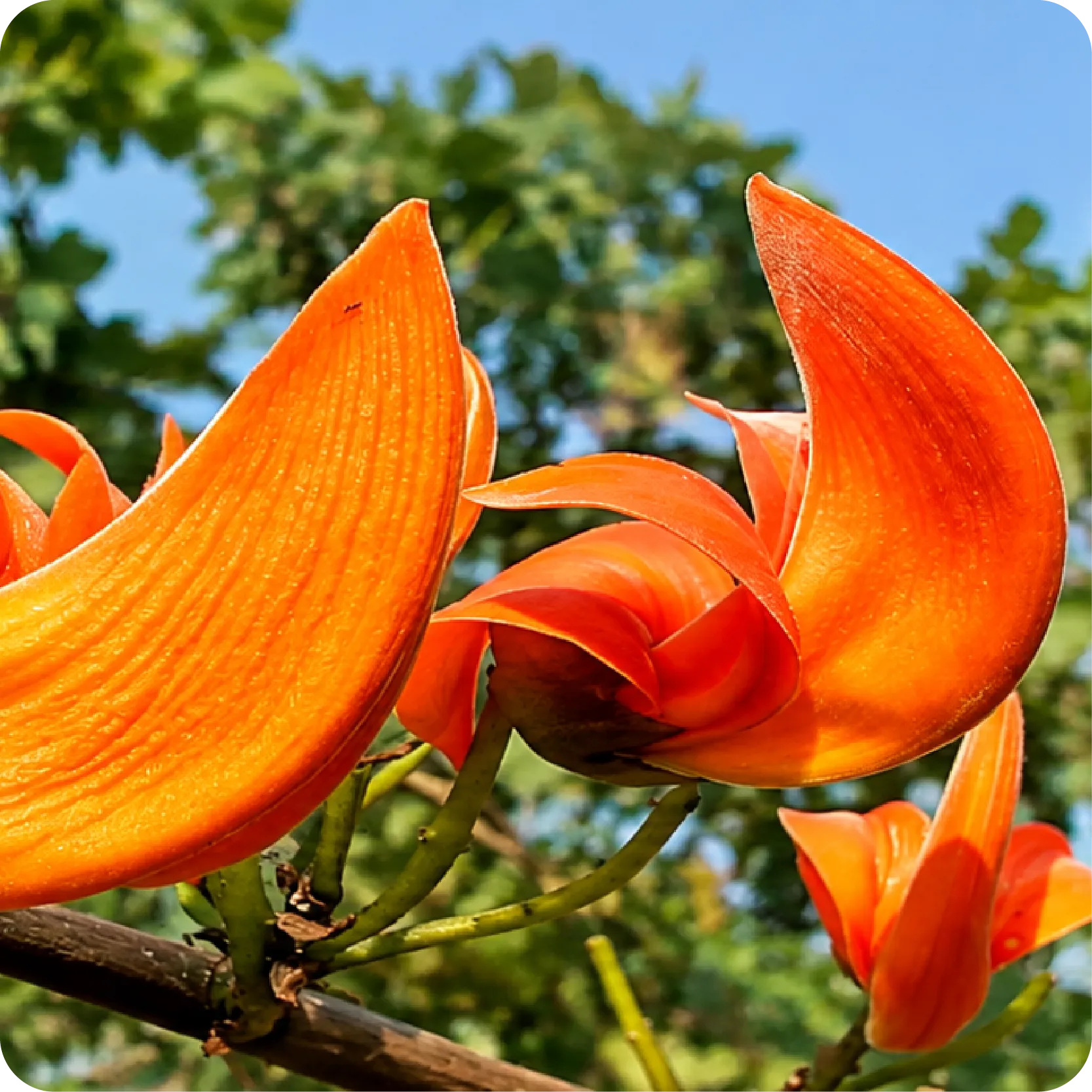
The combination of its growth habit, leaf structure, and flower characteristics can be useful when observing and identifying Butea superba. However, visual characteristics should be considered together with the botanical name and reliable information about the plant source when identifying raw materials.
02
Tuberous Roots & Growth Structure
Tuberous Roots
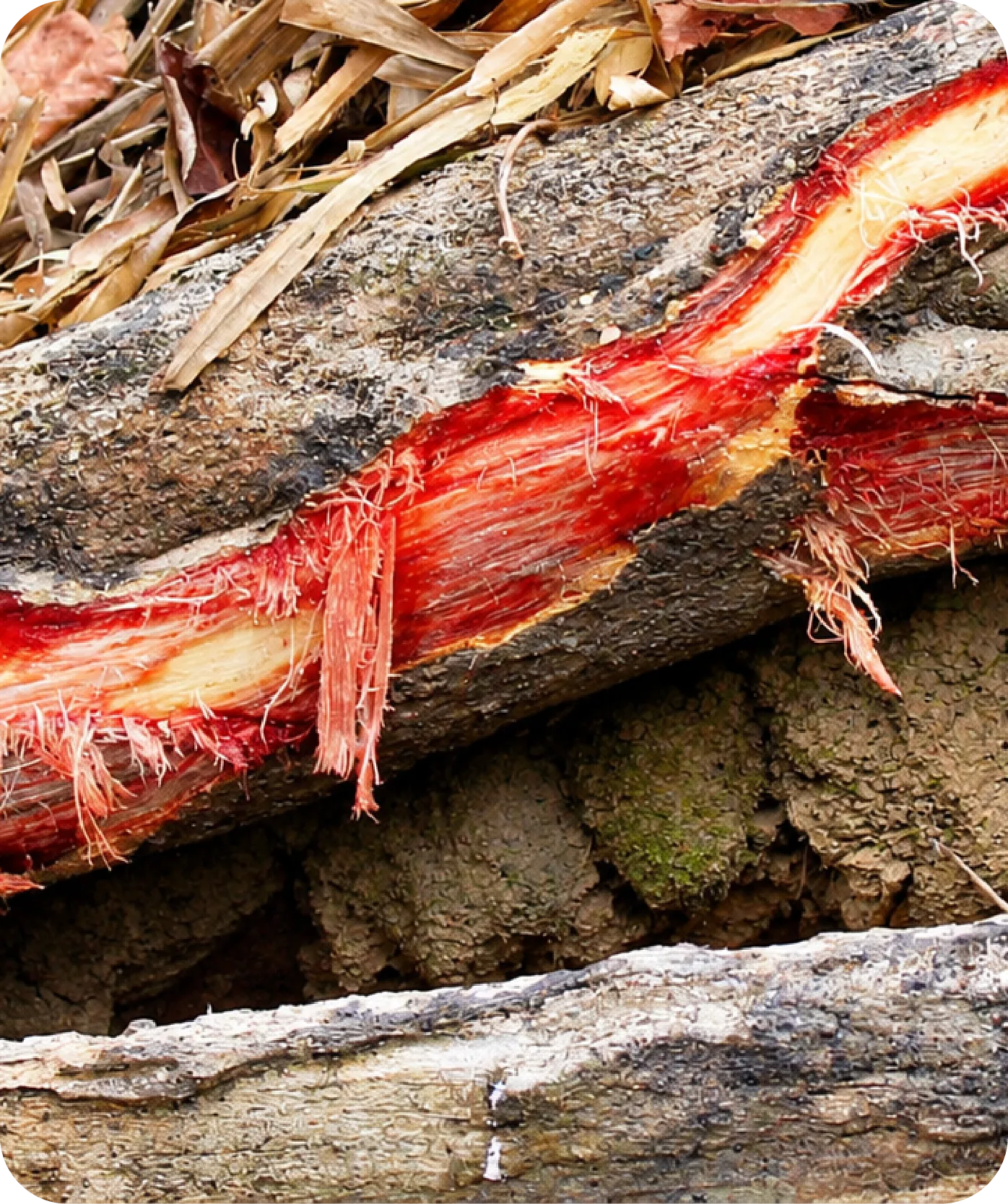
Butea superba develops long, tuberous roots that grow underground as the plant matures. The roots are traditionally considered the main part of the plant used in herbal preparations.
Natural Growth
The plant can reproduce naturally through seeds and by separating parts of the root or stem.
The condition of the raw root material is also an important consideration before processing. Proper identification, preparation, and handling can help maintain consistency when the material is later dried or processed into an extract.
03
Identification & Botanical Differentiation
Red Kwao Krua Identity
In Thailand, Butea superba is commonly known as Kwao Krua Daeng (Red Kwao Krua).
Different from Pueraria Mirifica
Butea superba and Pueraria Mirifica are different botanical species. Although both are commonly associated with the name “Kwao Krua,” they should not be considered the same plant.
Raw Material Identification
Accurate identification can be supported by the botanical name, plant source, and appropriate quality testing to help confirm the identity of the raw material.
For commercial raw materials, identification can also be supported by product documentation and quality testing. These checks are useful for confirming that the supplied material corresponds to the intended botanical source before it is used in further processing or formulation.